
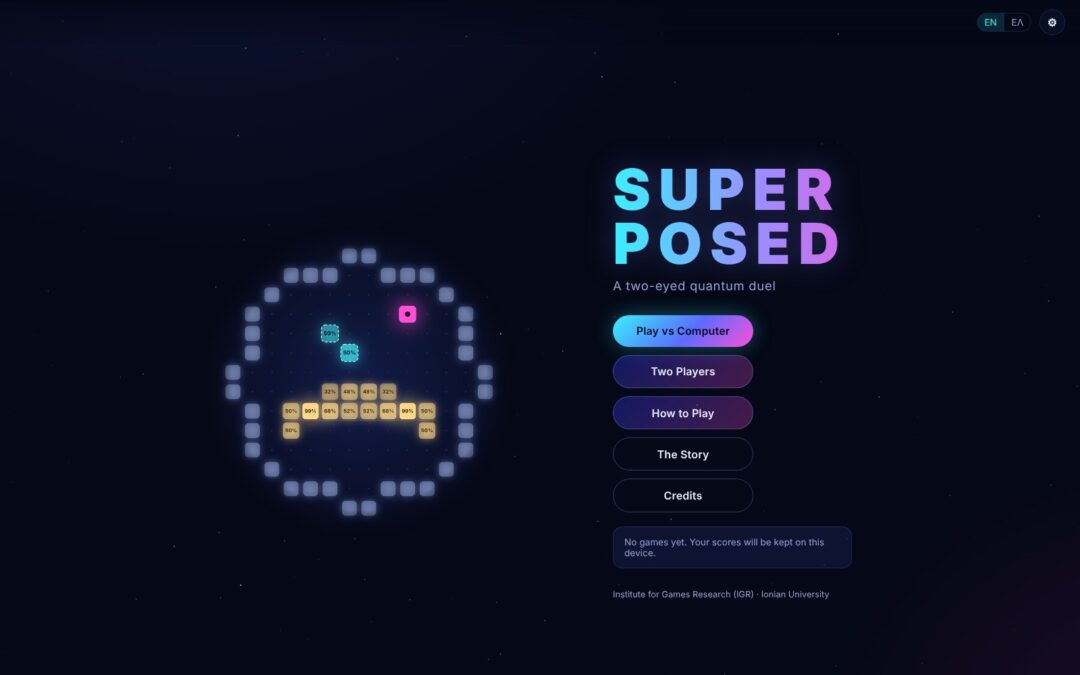
A two-eyed quantum duel, played on a face drawn by a quantum computer.
- Audience
- Students, researchers and the general public · no prior knowledge of physics needed
- Play time
- 5–10 minutes per game; matches of 2, 4 or 6 games
- Platform
- Web browser (desktop, tablet, mobile) · 1 player vs computer (3 levels) or 2 players on one screen · English and Greek · optional Quantum Inspire bridge for real quantum hardware
- Year
- 2026
- Status
- Prototype
About the game
What it is. Superposed is a two-player strategy game played on a 16 × 16 pixel face first drawn on a quantum computer. Each player is one of its eyes. The mouth, drawn by a single equation, keeps changing from a frown to a smile, and every eight rounds the face closes in. The goal is simple: touch the other eye.
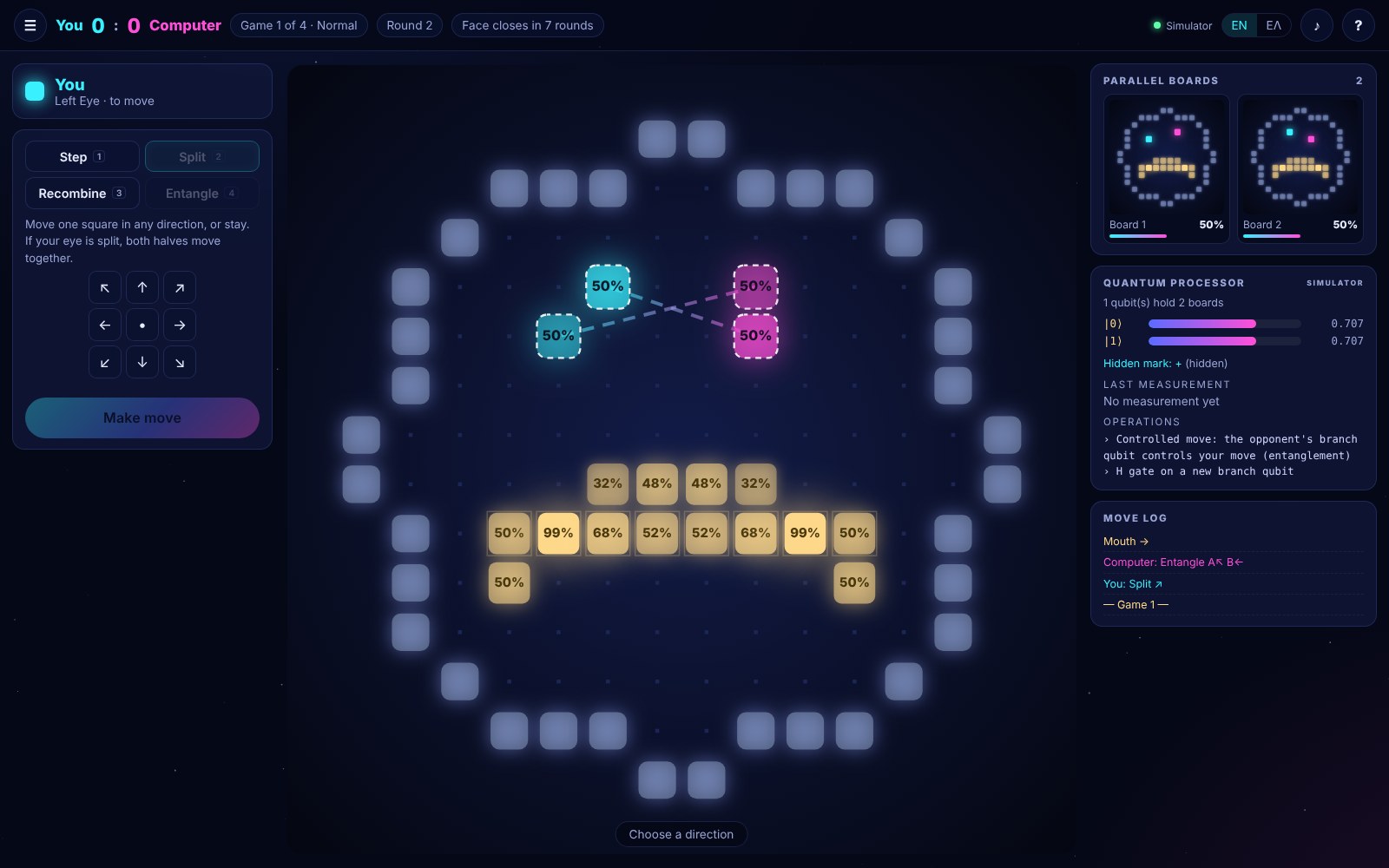
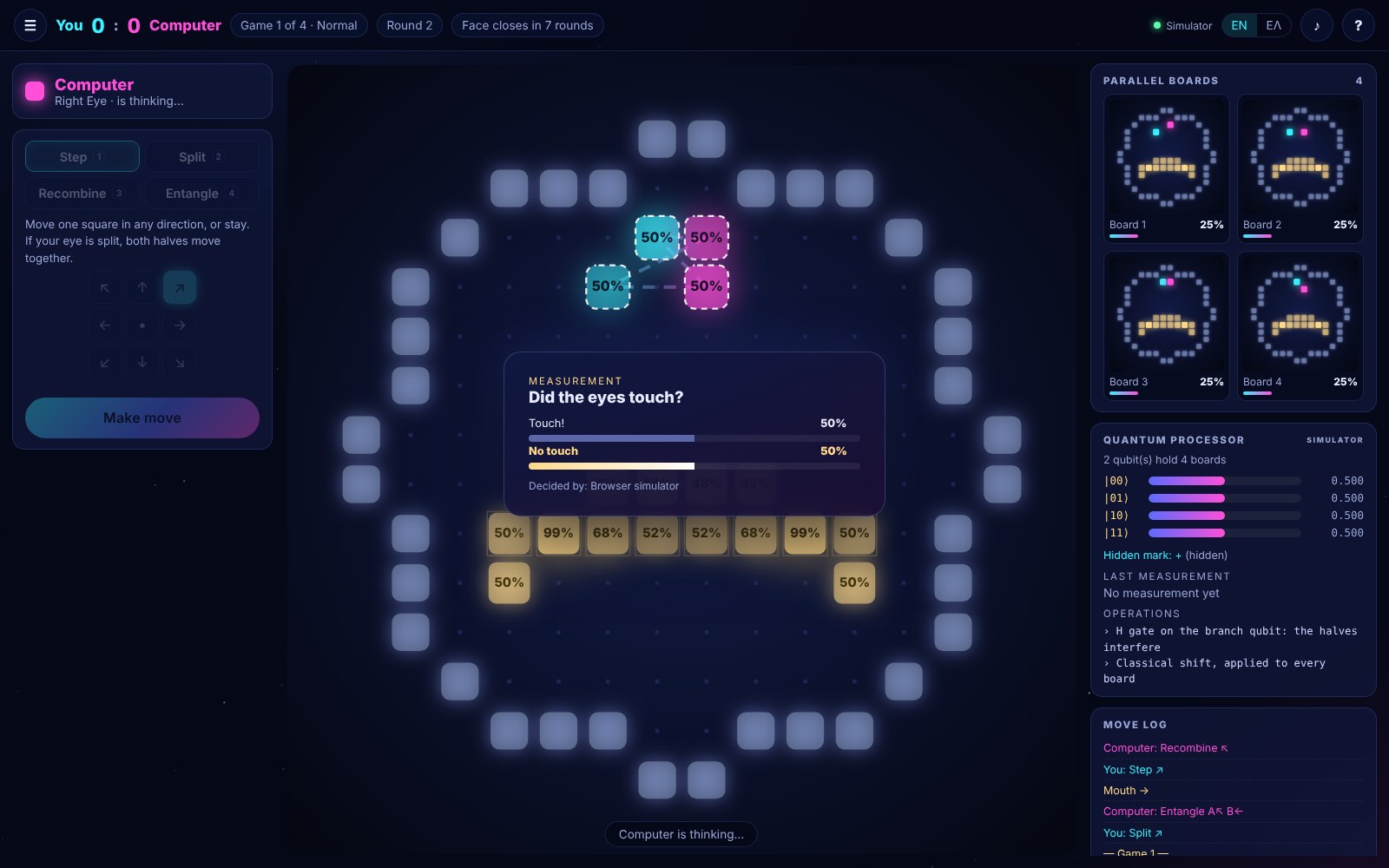
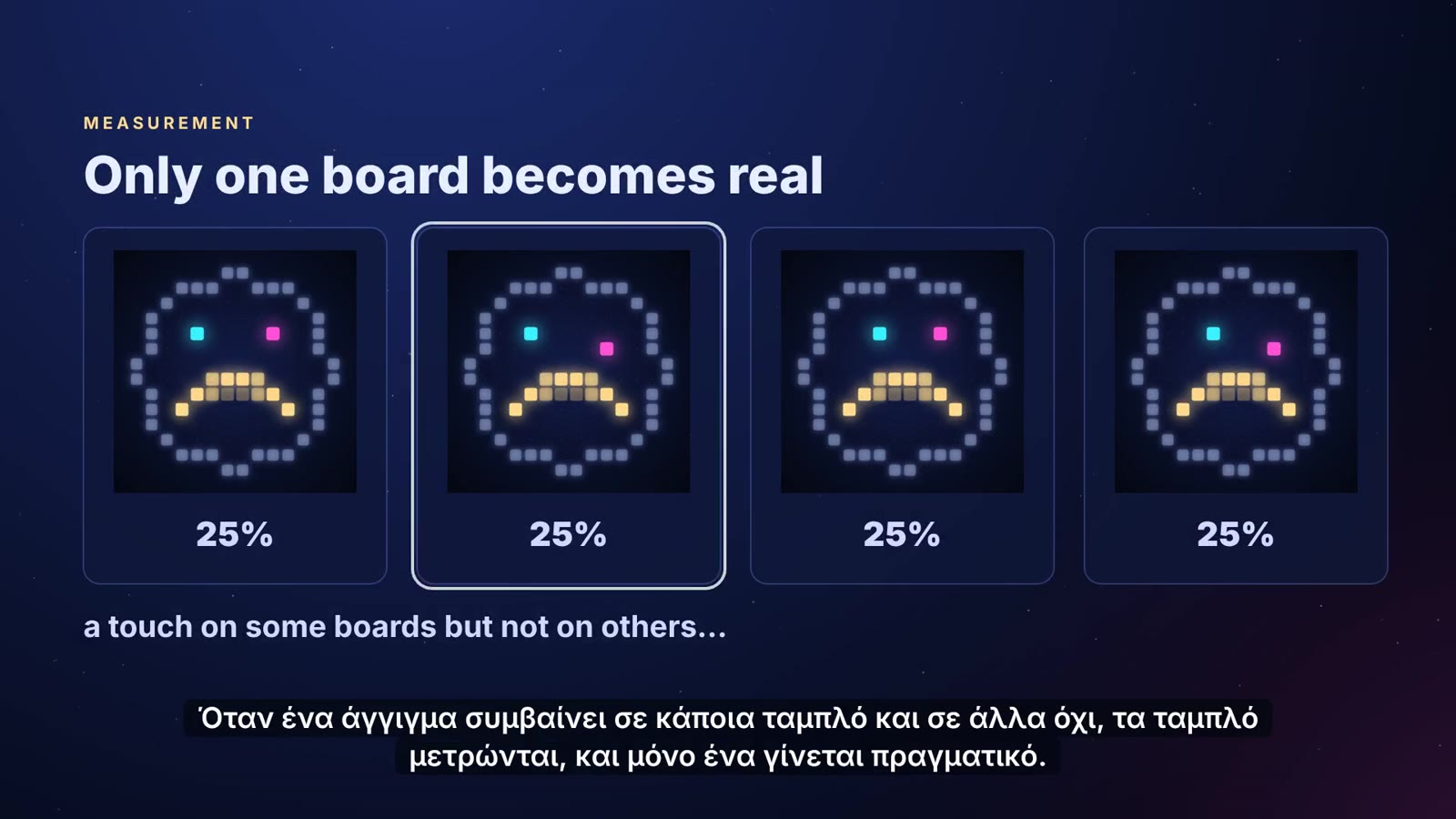
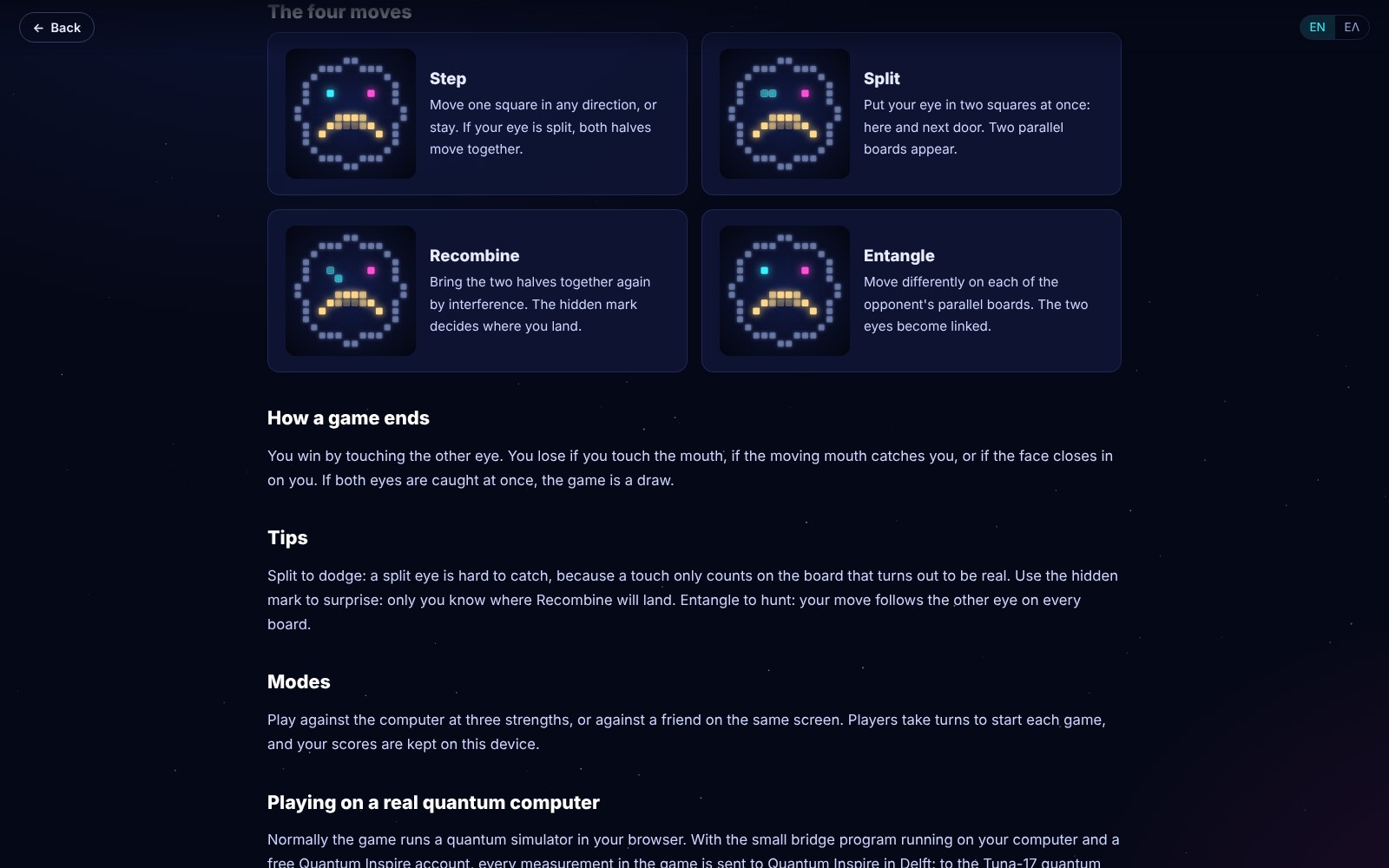
How it plays. The rules are quantum. An eye can split and stand in two places at once, which splits the game into parallel boards that are all played together. The two halves can be recombined so that they interfere, guided by a hidden mark the opponent cannot see. A player can entangle with the other eye, so that the two become linked. Nothing is decided until it has to be: when a touch or a catch happens on some boards but not on others, the boards are measured and only one becomes real.
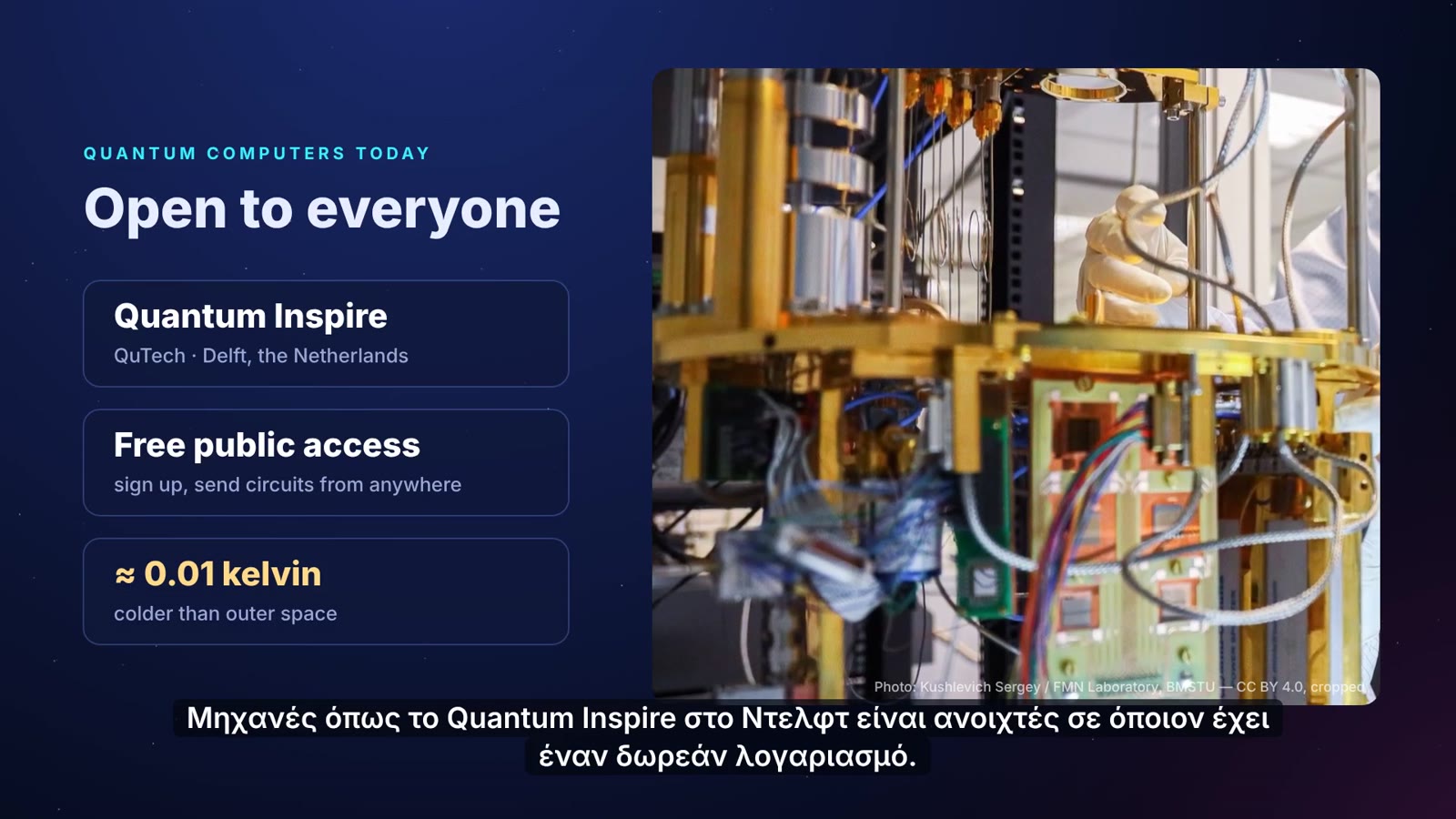
What runs behind it. Every split, recombination and entanglement is a quantum operation on a small register of qubits, and every decision is a measurement. In the browser the game runs an exact quantum simulator. With a small bridge program and a free Quantum Inspire account, each measurement is sent to Quantum Inspire in Delft, and to a real quantum chip when one is online.
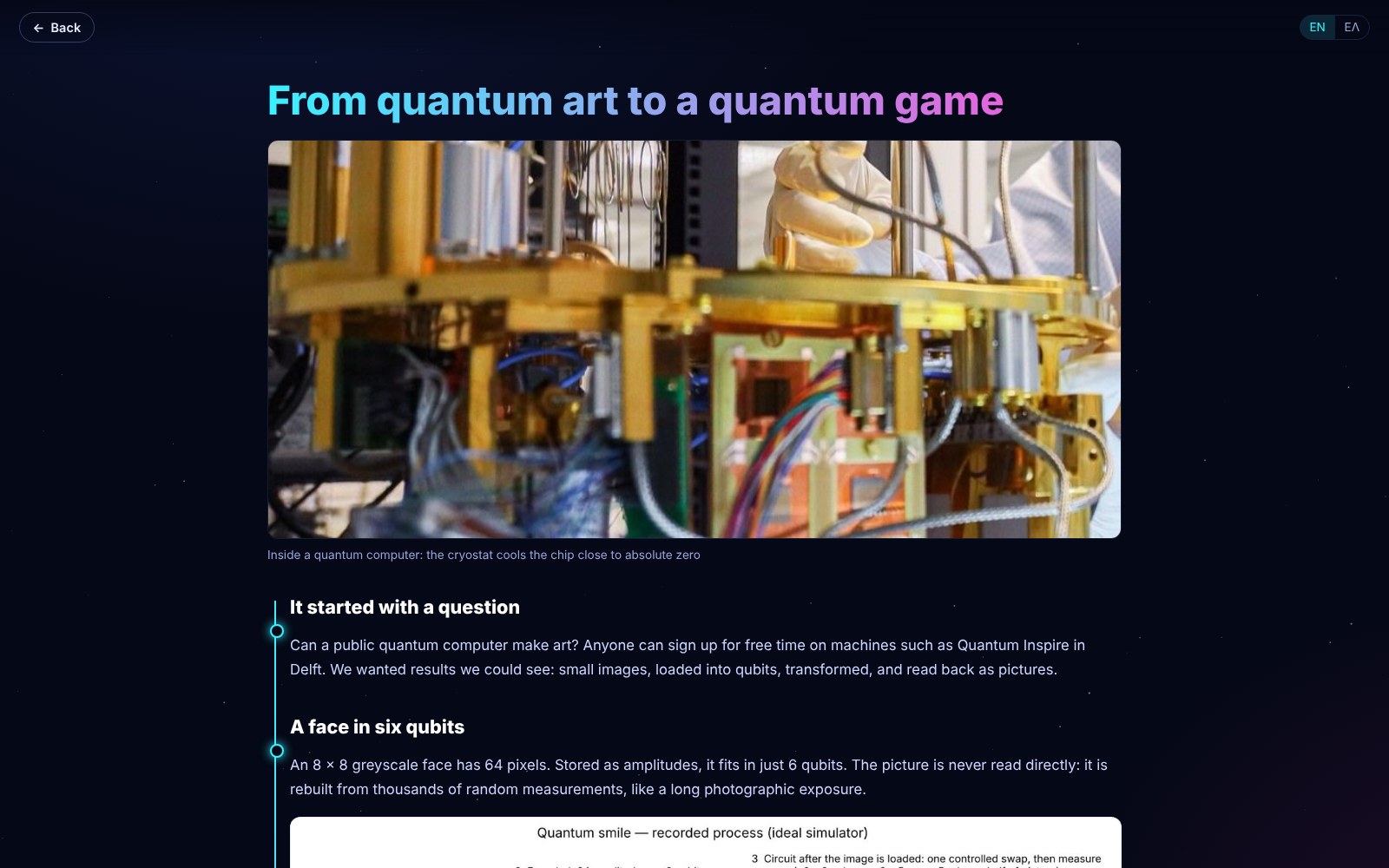
Where it came from. The game grew out of an art experiment at the Institute for Games Research: loading small greyscale images into qubits, transforming them with quantum gates and reading them back as pictures, and teaching a sad face to smile. The Story page inside the game tells that path from quantum art to a game.
Inside the game. One player against the computer (three levels) or two players on one screen; matches of 2, 4 or 6 games with alternating starts; a rules and moves card; a score record; English and Greek.
How it is used
- Introducing superposition, interference, entanglement and measurement through play
- Showing how quantum computers can be used creatively, in art and in games
- Game design studies: turning a scientific model into game rules
Play the game
Opens in a new window. Best on a desktop or laptop, with sound on.
Video
Screenshots
Use this game in your class, museum or research
Schools, museums and researchers can propose a collaboration with IGR.