
Build colonies on the Moon, Mars, Europa and Venus for a fictional Greek space agency, one frappé at a time.
- Audience
- Ages 12+, students, general public
- Play time
- Sessions of 30–60 minutes; the full four-world campaign takes several hours
- Platform
- Web browser, desktop (mouse and keyboard) and mobile or tablet (touch); best in landscape · English
- Year
- 2026
- Status
- Beta
About the game
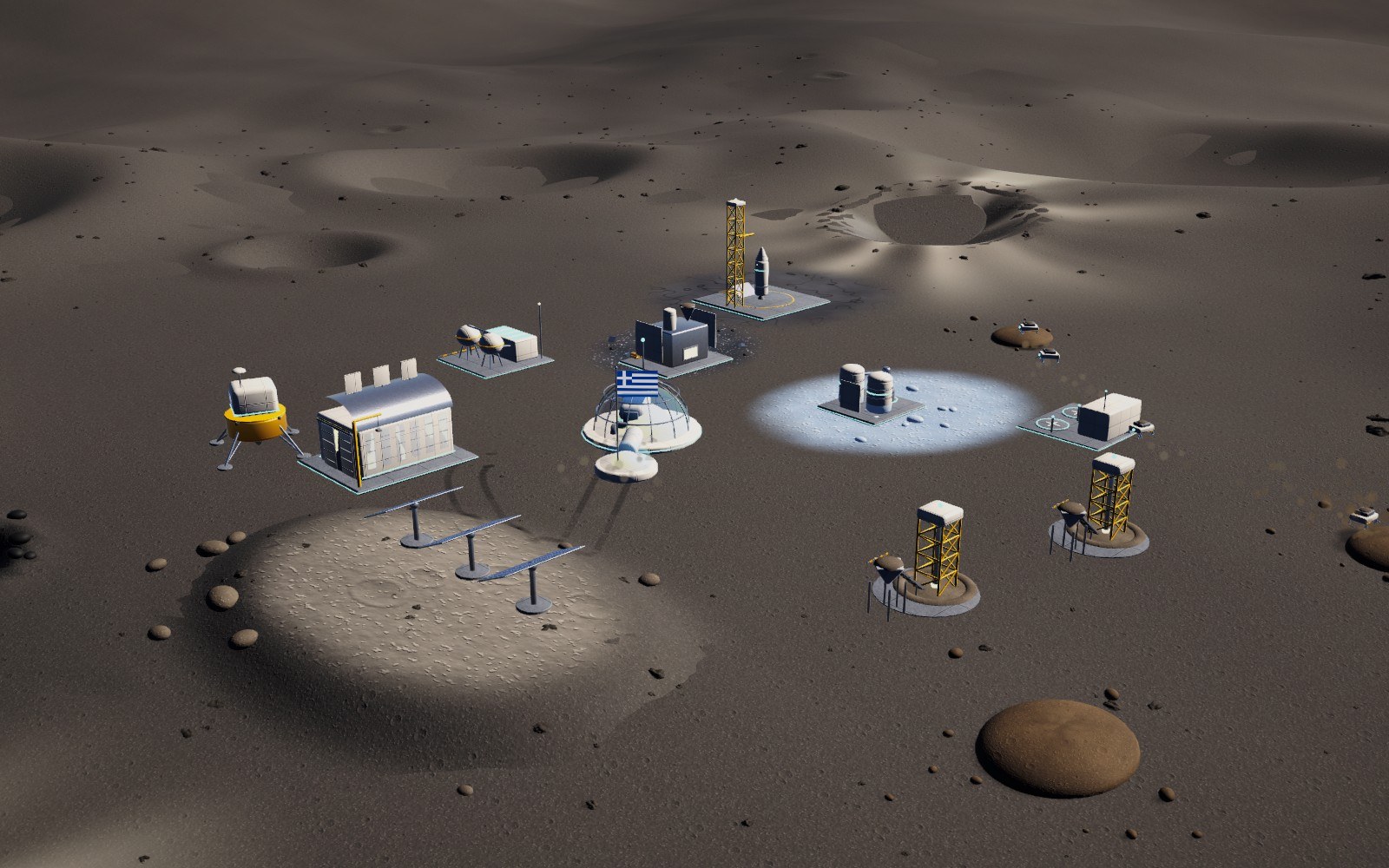
Space FrappeXploration is a light-hearted strategy game about running space colonies on a budget. You lead the colonies of a fictional Hellenic Space Agency across four worlds: the Moon, Mars, the icy moon Europa and a floating cloud city above Venus. On each world you land, read the ground, place every building where it works best and keep the production lines running: power, water and oxygen, ore, metals and rocket fuel.
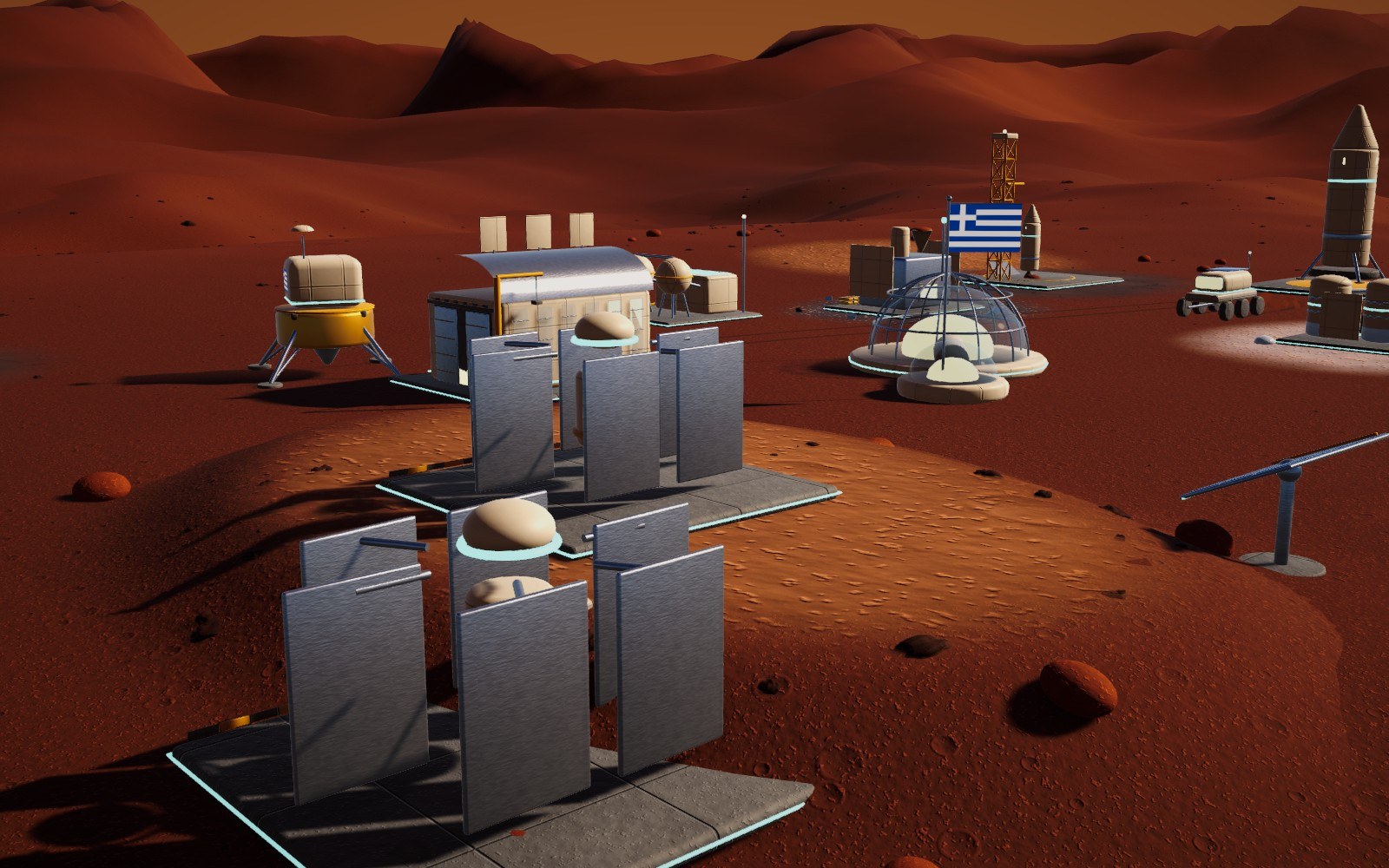
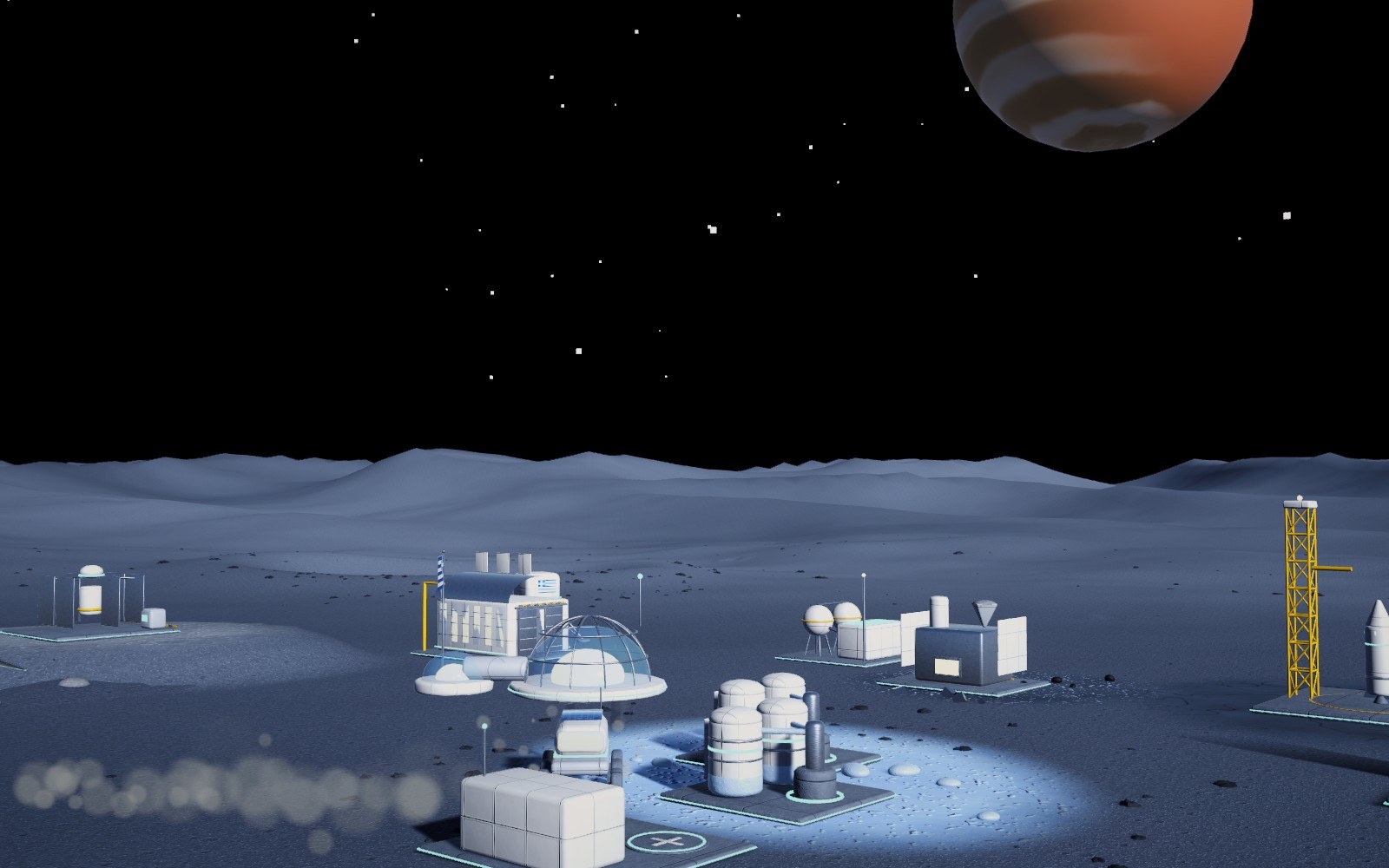
Every decision is an economic one. A daily allocation from Athens pays for building and upkeep, and Earth buys your surplus, but the price drops if you sell too much at once. Each world changes the rules: sunlight fades with distance from the Sun, so Mars needs a small nuclear reactor and Europa depends on two, while Venus has sunlight to spare but no ground to mine. To leave a world you invent its key technology, build the launch vehicle, stockpile fuel and save the launch budget. Each world asks a little more than the one before, and Venus is the hardest.
- Four chapters, each with its own terrain, sky, problems, invention and mission briefing
- A guided introduction on the Moon, then free play on every world
- “Missions from Athens”: short goals with rewards, so there is always something to achieve if you stay
- Problems that come more often the longer you stay, each with a clear fix or the option to wait
- Click any building, ground feature or requirement to see what it is for and how to get it
- Music, sound effects and animated launch and ending cutscenes
This is a humorous game. The agency, its staff and its news ticker are fictional. No offence is meant to any person or organisation, and we hope the real agency gets to conquer the galaxy in the end.
How to play: Press Play on the title screen. Click a building or the ground to see what it does or what lies underneath. Press Z or the Build button to place buildings, V for the tech tree and B for the status list. Right-click to give orders, scroll to zoom, and move the view with the arrow keys or the screen edge. The mission card at the top right shows your current goal, and Plan ahead shows what you need to leave the world. On touch screens, tap to select, press and hold for an order, drag with two fingers to move the view and pinch to zoom. M or the Sound button mutes the game. Press F1 or ? for help at any time.
How it is used
- Teaching budgeting, income and upkeep through a running economy
- Practising planning and systems thinking with linked production lines
- Learning to read terrain and choose sites from visible evidence
- Introducing space science (sunlight, water ice, reactors) through play
- Showing game-design students a guided onboarding built on flow theory
Play the game
Opens in a new window. Best on a desktop or laptop, with sound on.
Screenshots
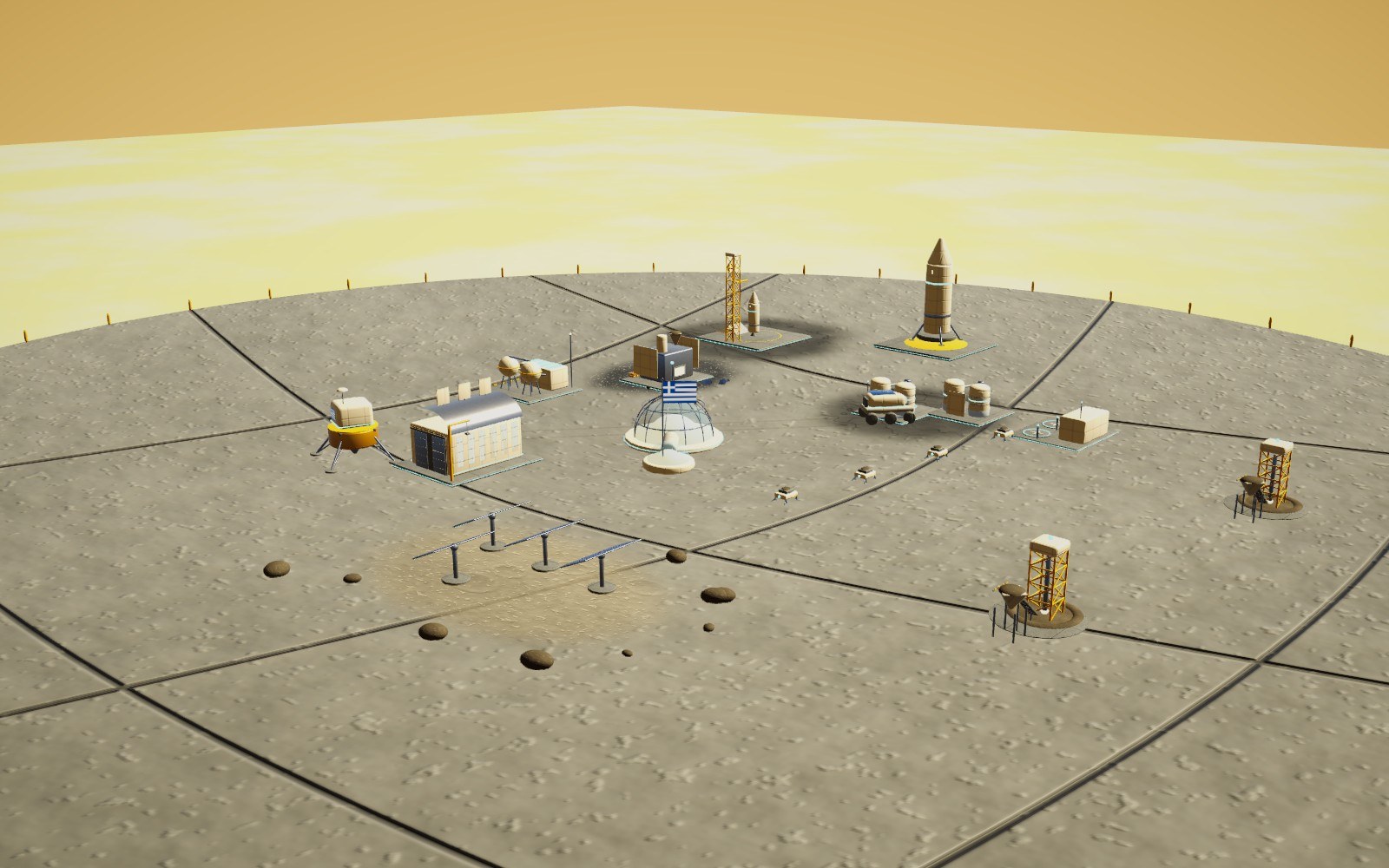
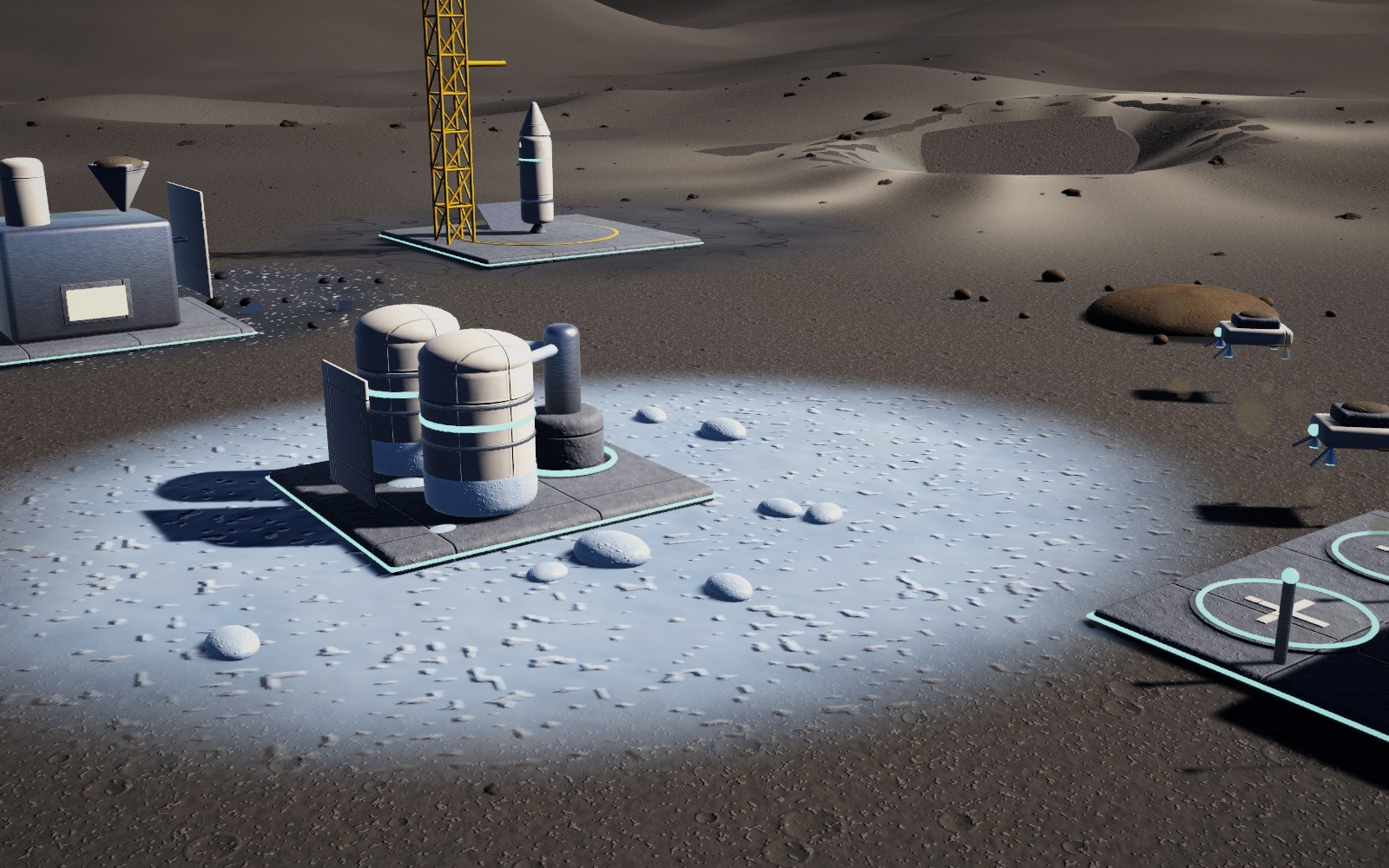
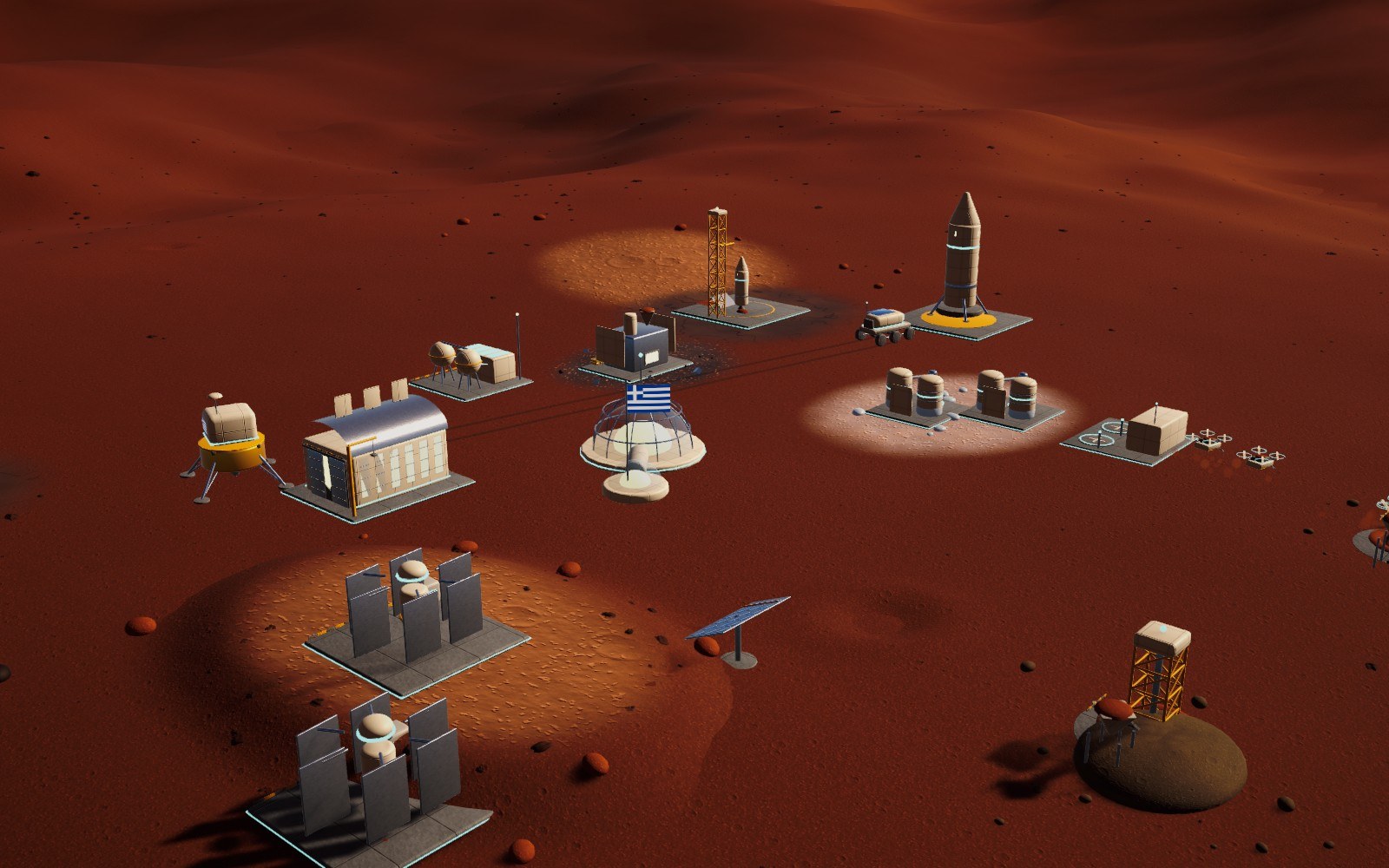
Use this game in your class, museum or research
Schools, museums and researchers can propose a collaboration with IGR.